Automated Design-to-Manufacturing Pipeline

Highlights
Automate the design-to-manufacturing process for hundreds of uniquely shaped wood pieces—each requiring its own manufacturing file.
Built an intelligent design-to-manufacturing pipeline that converted unique design profiles into production-ready DXF files.
Over 900 unique manufacturing files generated in less than 1 second—a process that originally took approximately 3 months.
Background
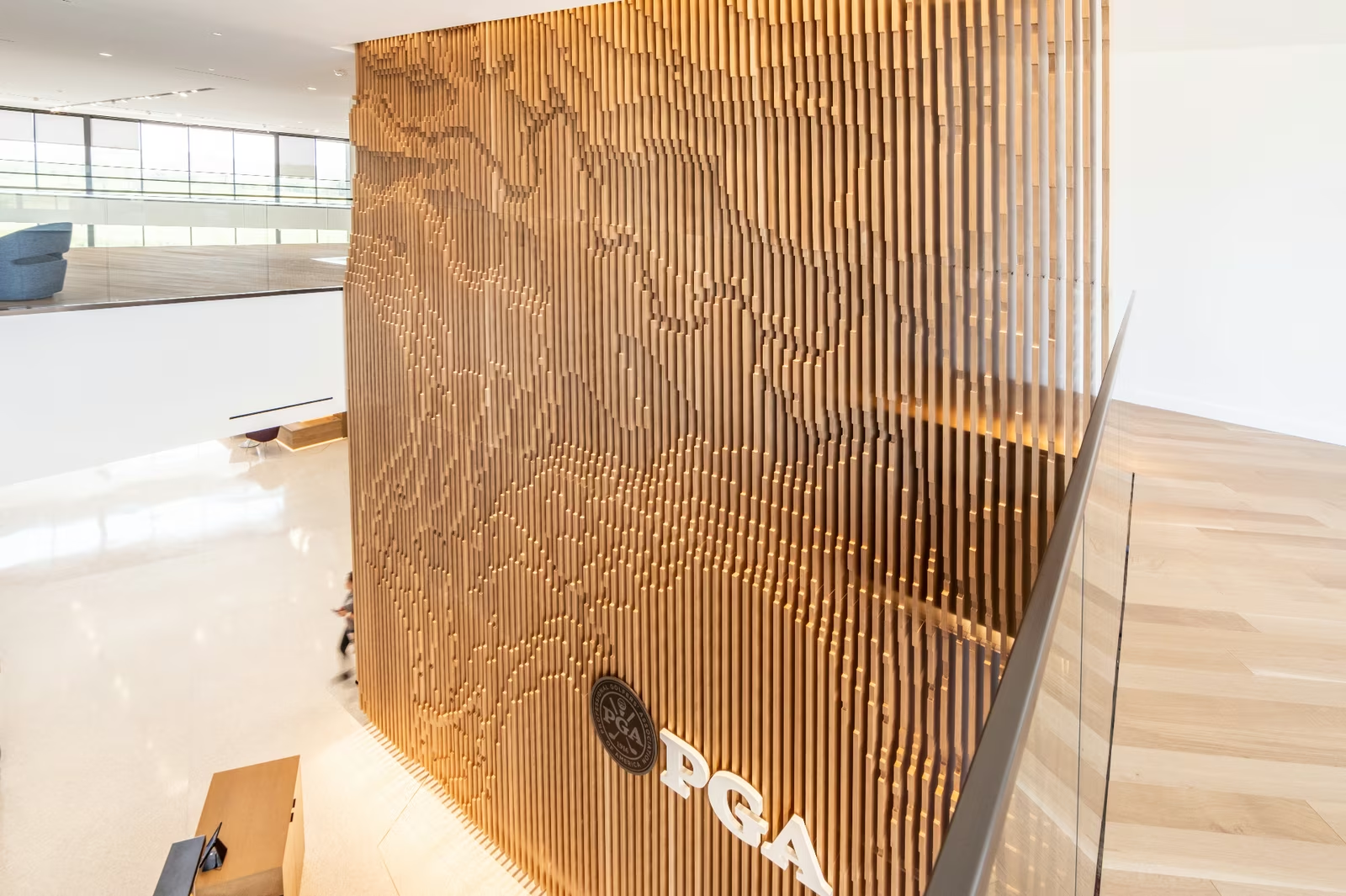
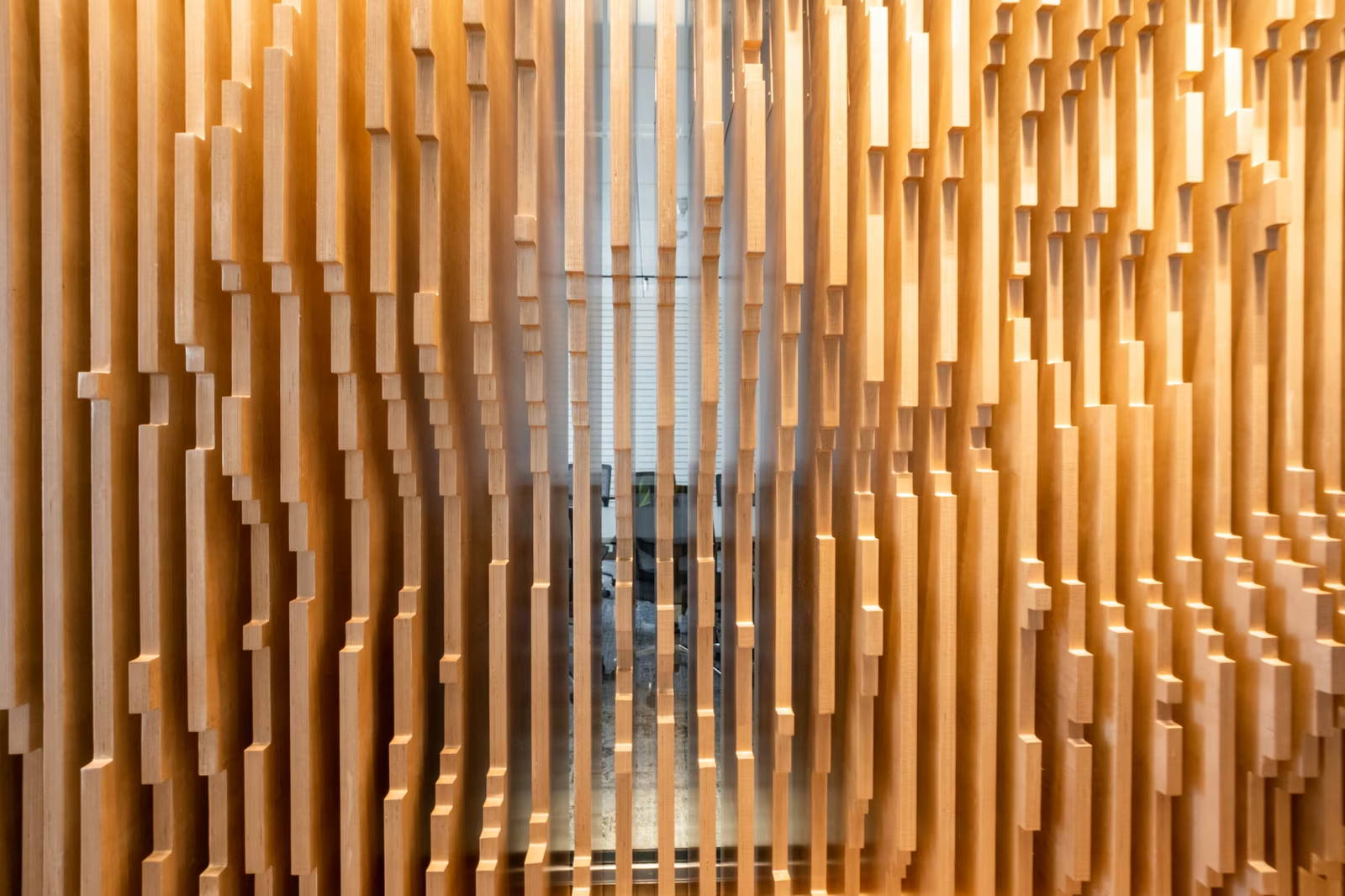
Mak Studio is a design firm specializing in large-scale architectural installations. For a high-profile wall installation project, the design called for hundreds of uniquely shaped wood pieces arranged in a complex pattern. Each piece had a distinct profile, and each required its own production-ready manufacturing file for CNC fabrication.
The Challenge
The traditional workflow for this type of project was entirely manual: a designer would extract each unique shape from the master design, create an individual DXF file formatted for the CNC machine, verify dimensions and tolerances, and organize files for the production sequence. With over 900 unique pieces, this process was estimated to take approximately three months of dedicated design work—creating a significant bottleneck between design approval and production start.
Our Approach
General Lattice built an intelligent design-to-manufacturing pipeline that programmatically analyzed the master design, extracted individual piece geometries, applied manufacturing constraints and tolerances, and generated production-ready DXF files—all in a single automated workflow. The pipeline encoded the manufacturing logic so that each file was formatted correctly for the specific CNC equipment, including tool path considerations, material allowances, and nesting optimization.
The Outcome
The automated pipeline generated all 900+ unique manufacturing files in less than one second. What would have taken three months of manual work was completed nearly instantaneously, eliminating the design-to-manufacturing bottleneck entirely. Beyond the time savings, the automated approach eliminated the human error inherent in manually creating hundreds of individual files, improving production quality and reducing waste.
This project illustrates how computational design applies beyond lattice structures—any manufacturing process that requires translating design intent into production-ready outputs at scale can benefit from the same automation principles.
Gallery



Ready to start a project?
We'd love to hear about your project and explore how we can help.
Talk to Our Team